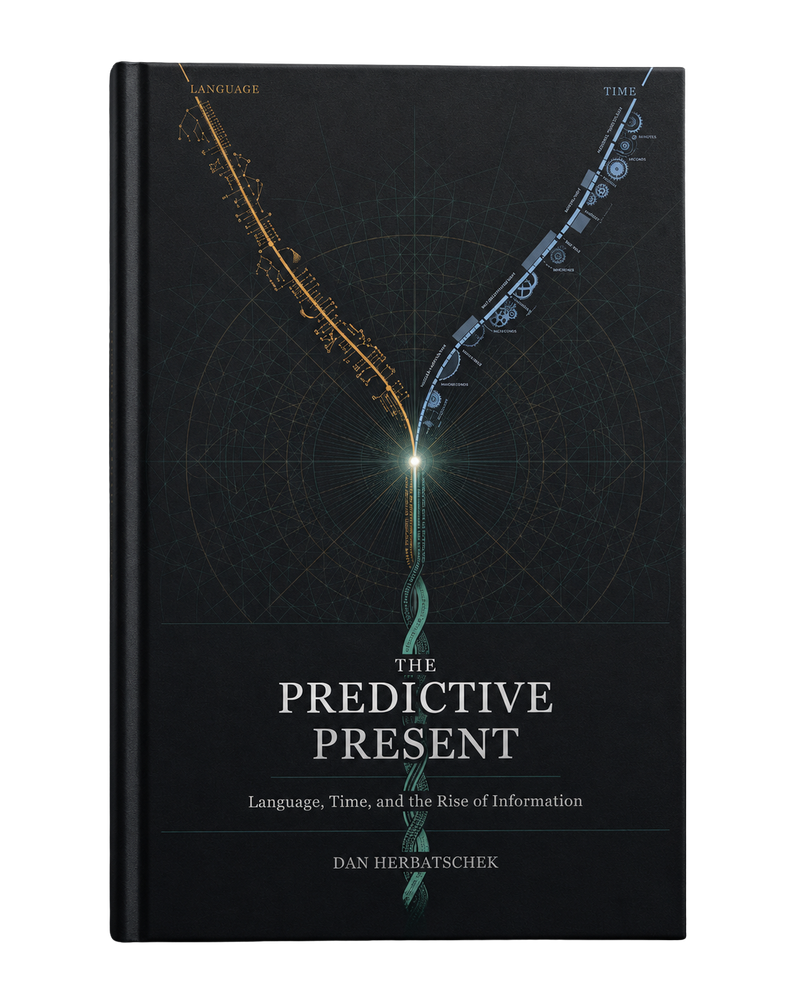
The Predictive Present
The future now arrives in fragments. The weather as a confidence interval, traffic as a probability, a sentence finished in pale gray. We call this a technological condition. The Predictive Present argues it is, more deeply, a condition of language and of time.
The predictive present is not merely a technology. It is a cultural achievement and, less comfortably, a cultural choice.
Dan follows the arc by which language, time, and information were braided into a single infrastructure: from the grammar of tense and the discipline of the calendar to the dream of a perfect language, the mechanics of measurement, and the authority of the feed.
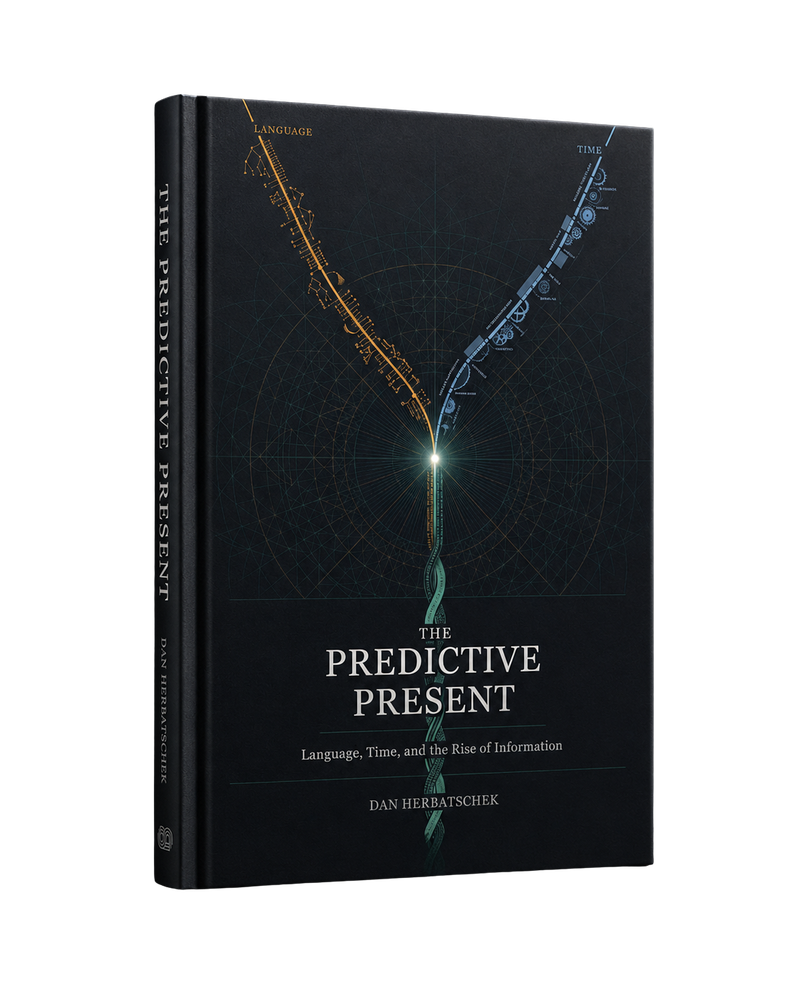
Two curves — TIME and LANGUAGE — meeting at a single point of light. The convergence is the predictive present itself.
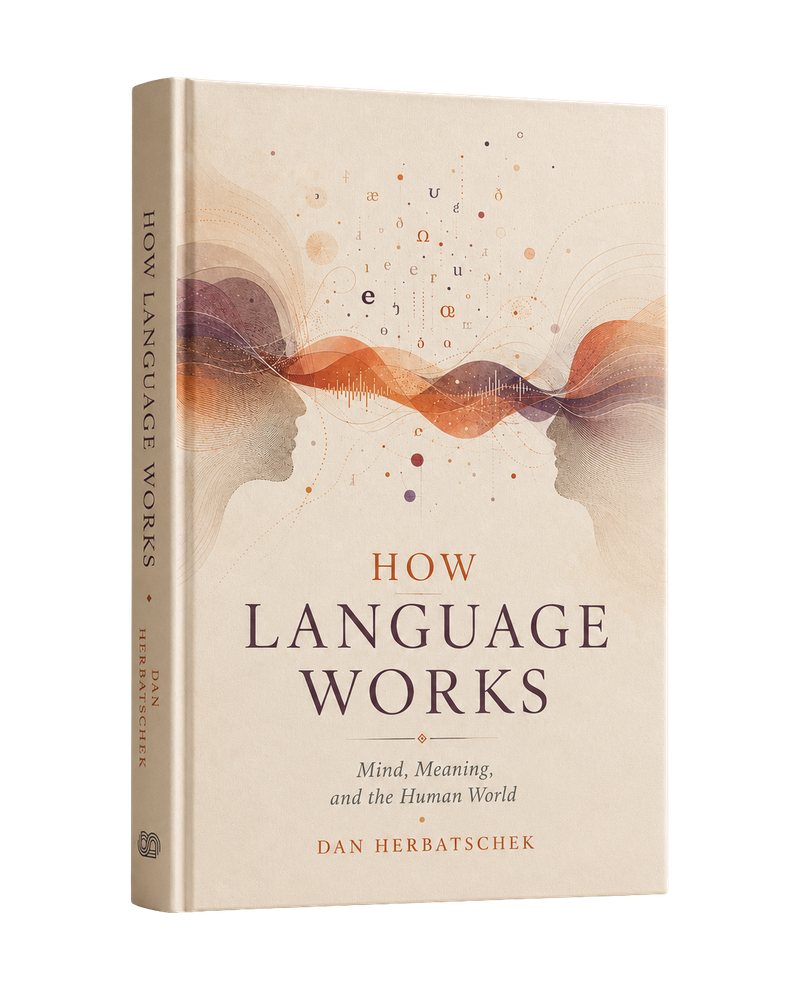
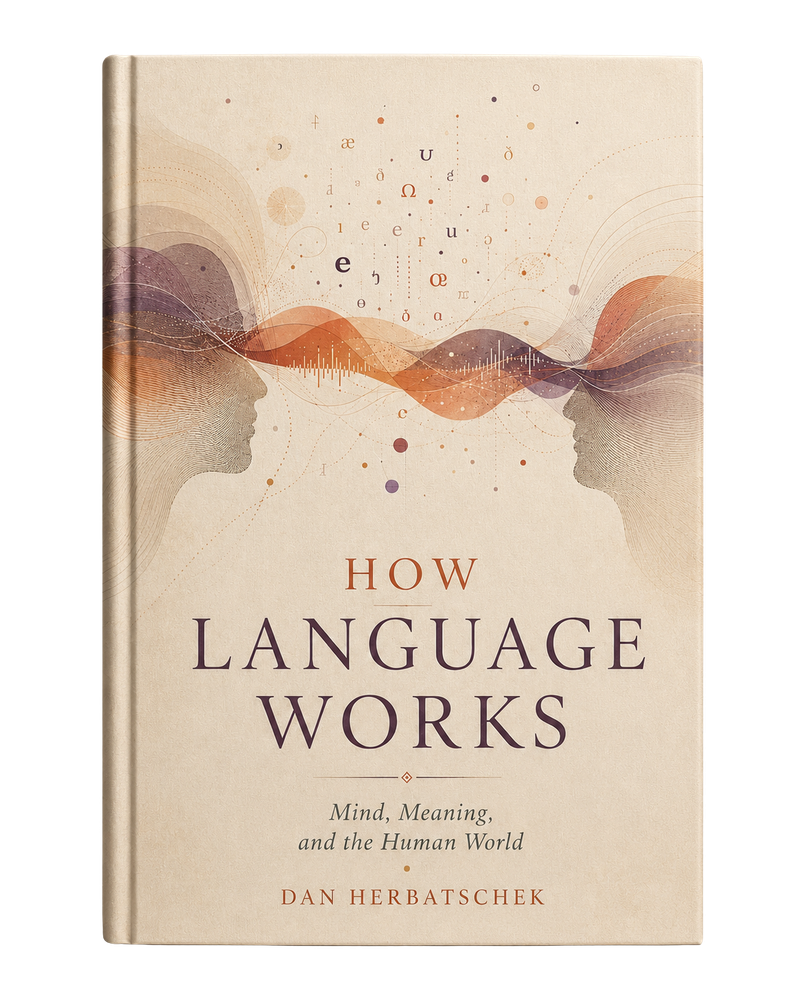
Two profiles, a soundwave passing between them. Meaning built in the space between people.
How Language Works
Language is a system of signs. A way of being in time with another mind. A sentence is less a string of symbols than an act of coordination; between speaker and listener, memory and anticipation, the world as it is and the world as it is taken to be. How Language Works begins there.
Language is not a tool the mind uses. It is one of the shapes the mind takes when it turns toward another.
Dan moves through the structure of the problem from phonology and the grammar of reference to the philosophy of meaning, the cognitive architecture of speech, and the silent interpretation every conversation performs. Meaning, he argues, is not lodged inside words; it is built, continually, in the space between people.
We publish work that does structural work.
A book may inform without altering the shape of its field. Another may re-describe its field so that the questions inside it are different afterward. We are interested in the second kind. Method-bearing, frame-shifting nonfiction that an attentive reader will keep nearby for years.
We publish four titles a year, each meant to be read more than once.
Our feature publications.